







1 / 12
This nine-day route is the classic Moroccan circuit. You land in Marrakech, cross the High Atlas to the Sahara, explore Fes and the blue town of Chefchaouen and finish on the Atlantic coast at the Hassan II Mosque.
The itinerary begins with an airport pick-up so your first evening is yours to enjoy in the Red City, and it ends close to Casablanca’s airport, which makes the logistics simple for international flights. Long drives are alternated with free or guided days, so you never travel two heavy days in a row.
Why travelers choose this route
- Airport to airport. You are greeted at Marrakech Menara Airport by a driver holding a sign with your name, and you finish in Casablanca for your flight home.
- Four great landscapes. High Atlas passes, the Sahara dunes, the Middle Atlas cedar forests and the Atlantic coast.
- Fes with a certified guide. A full day in the medina, the spiritual and intellectual capital of Morocco.
- Rome in Africa. Volubilis, then the imperial city of Meknes, on the way to Chefchaouen.
- The coast to finish. Rabat’s Hassan Tower and the Hassan II Mosque, one of the few mosques open to non-Muslims.
Day-by-day itinerary
Day 1: Arrival in Marrakech, the Red City awakens
Your Morocco journey begins the moment your plane lands at Menara Airport (RAK). Your private driver is waiting with a sign bearing your name and takes you to your riad in the medina.
The rest of the day is yours. Many travelers walk to Jemaa el-Fnaa in the evening to see the square fill with storytellers, musicians and food stalls.
Day 2: Marrakech, Tizi n’Tichka, Telouet, Ait Ben Haddou and the Dades Valley
The real road trip begins. You leave the city and climb the Tizi n’Tichka pass at 2,260 m, the highest major mountain pass in North Africa, with views over deep valleys.
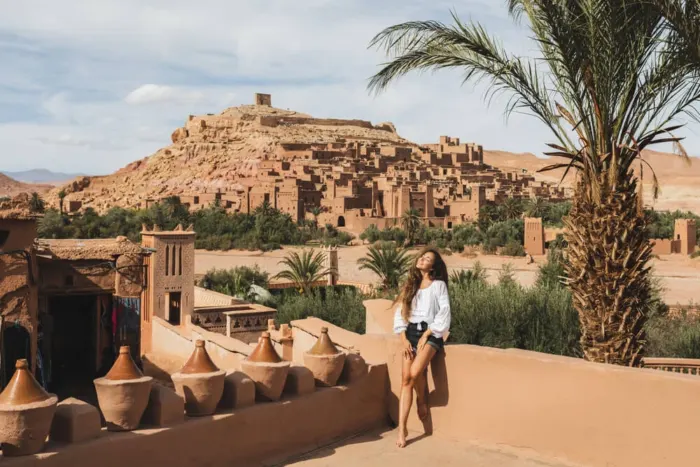
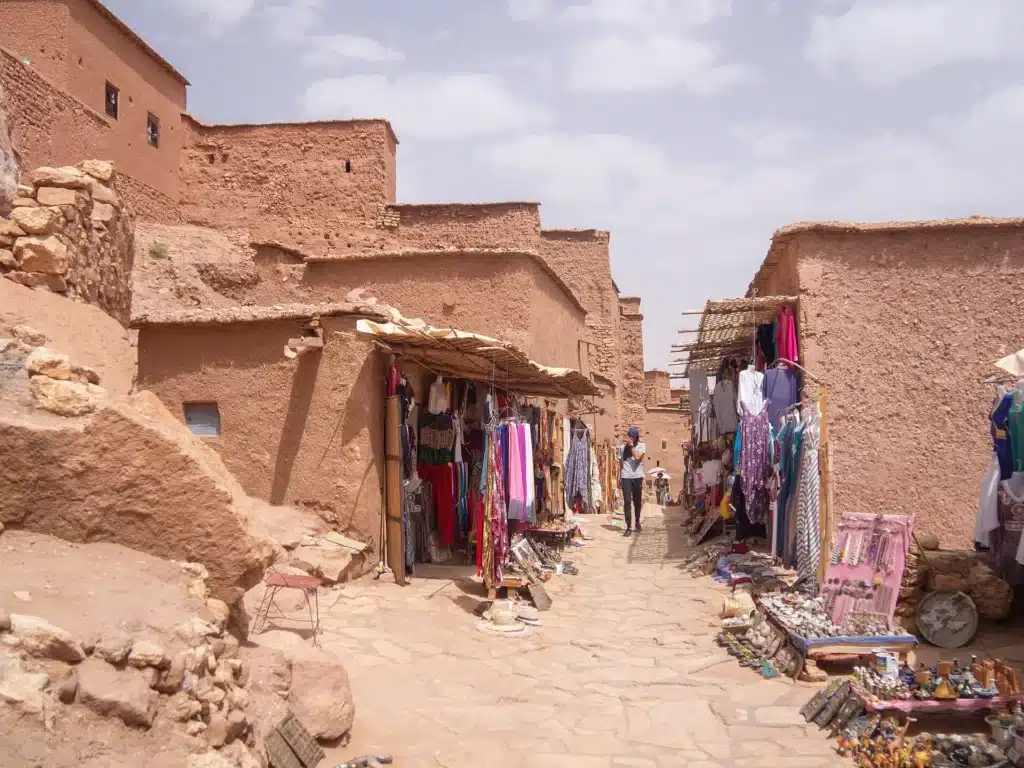
After the Telouet kasbah and the UNESCO-listed ksar of Ait Ben Haddou you continue to the Dades Valley for dinner and the night.
Day 3: Dades Valley, Todra Gorge, Erfoud and the Merzouga Sahara
After breakfast overlooking the Dades River you drive to Todra Gorge, where 300 m limestone cliffs rise on either side of a riverbed. You walk through the canyon before the road crosses the plains to Erfoud and Merzouga.
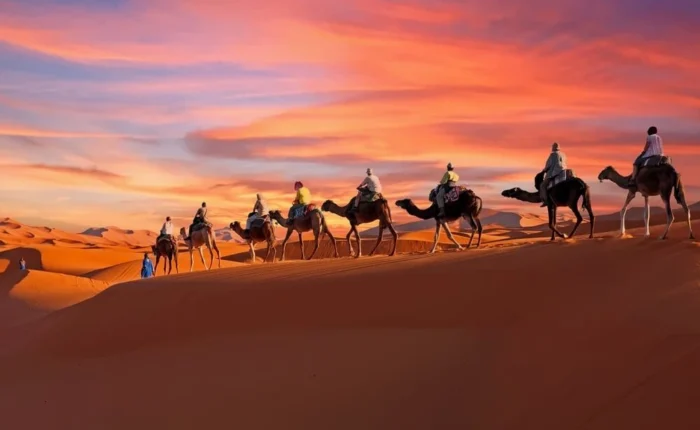
In the afternoon you ride a camel into the Erg Chebbi for sunset and sleep in your own private tent after dinner and music at camp.
Day 4: Sunrise on the dunes, the Ziz Valley, Midelt, Ifrane and Fes
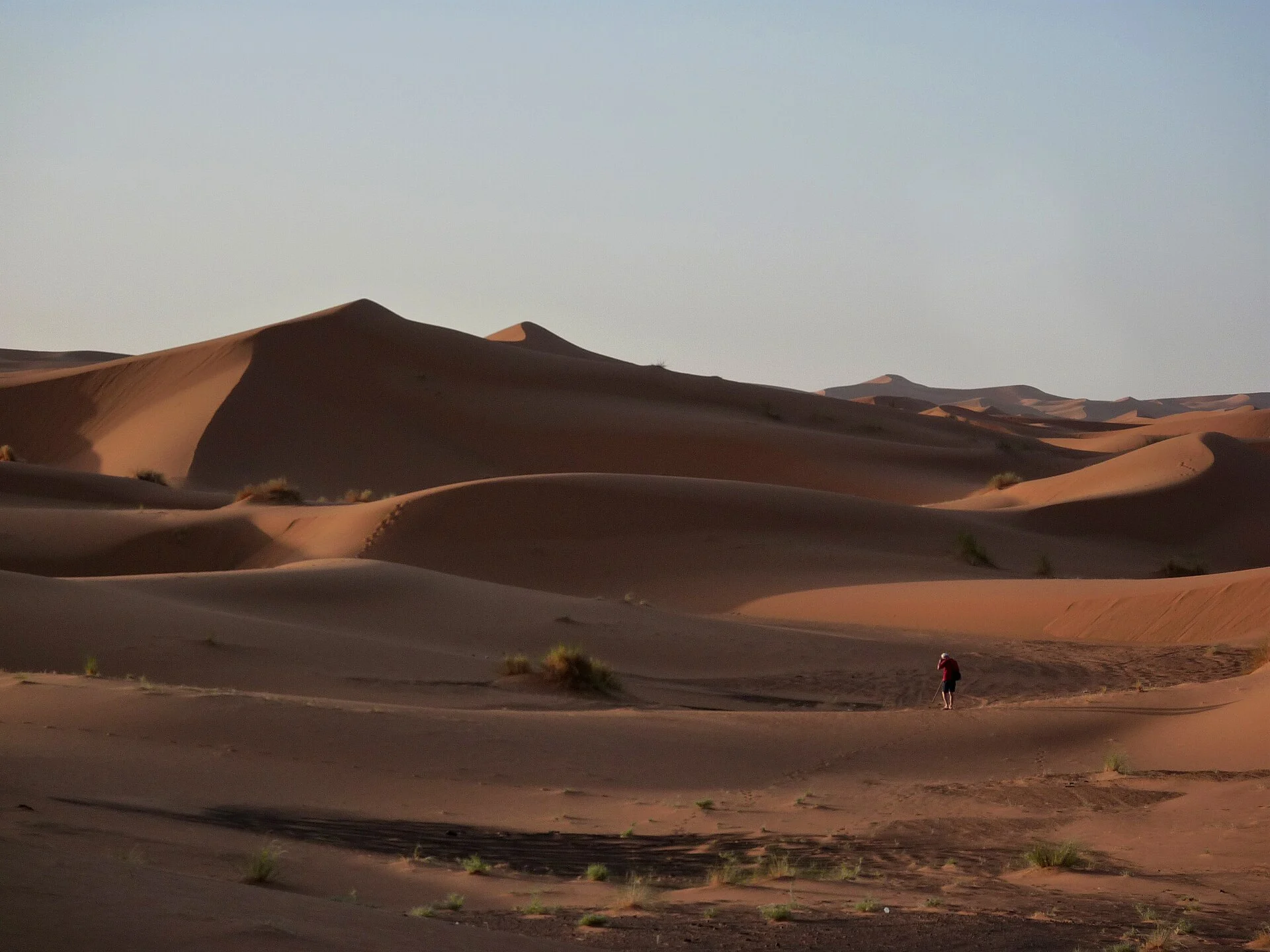
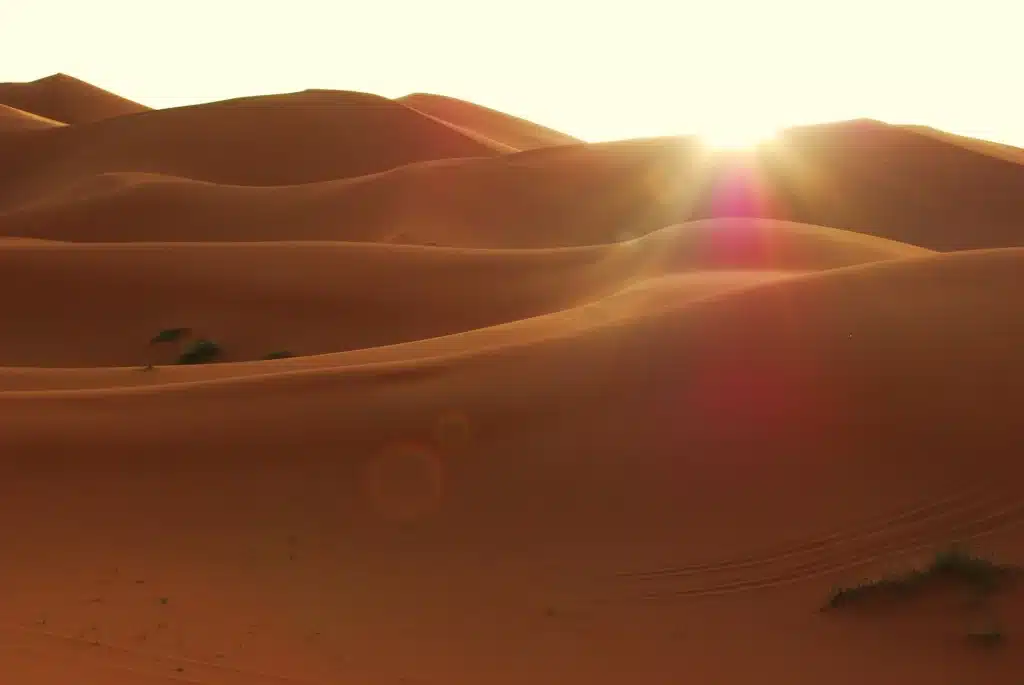
You are woken before dawn to climb the nearest dune and watch the sunrise, one of the best photo opportunities of the trip. After breakfast you return to Merzouga by camel or 4x4 and begin the long drive north.
The road follows the Ziz Valley, climbs through Midelt and the cedar forests near Ifrane and descends to Fes in the evening.
Day 5: Fes, a full-day guided medina tour
Today you do not need the car. A certified local guide takes you into Fes el-Bali, the largest car-free urban zone in the world, a UNESCO World Heritage site with a labyrinth of more than 9,000 alleys.
You visit medersas, souks and artisan quarters and learn how the medina has worked for centuries.
Day 6: Fes, Volubilis, Meknes and Chefchaouen
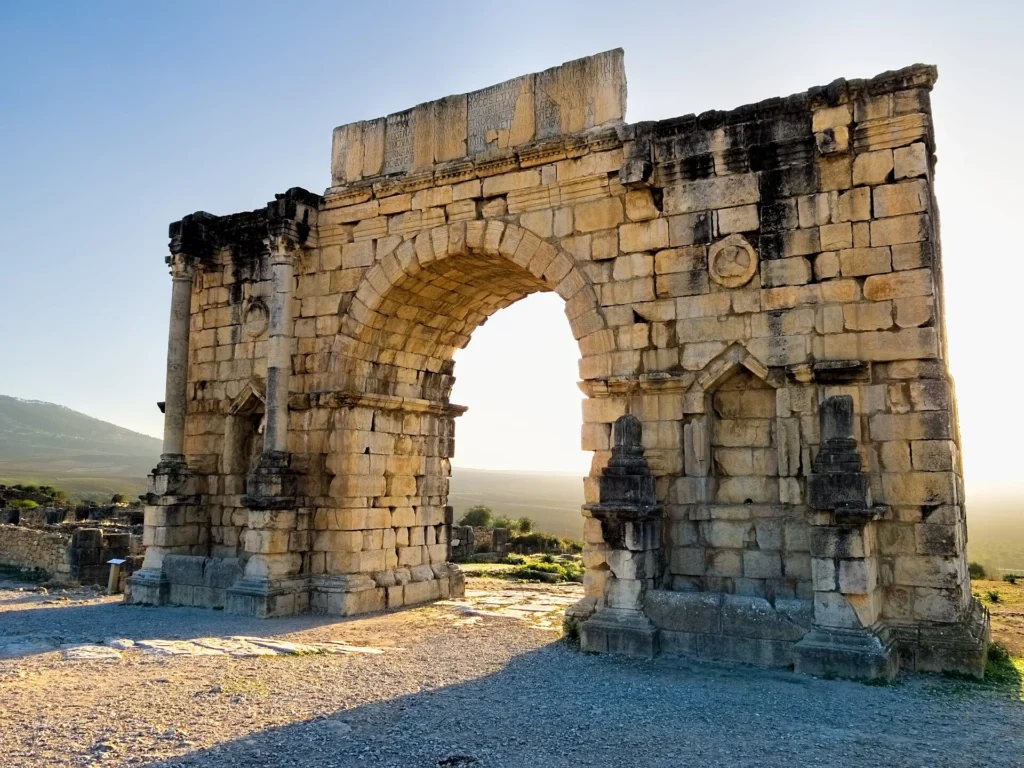
You leave Fes through the fertile Saiss plain to Volubilis, the southern outpost of the Roman Empire, where the ruins and mosaics are remarkably well preserved.
After Meknes, the imperial capital, you climb into the Rif Mountains to the blue town of Chefchaouen.
Day 7: Chefchaouen, the Blue Pearl, a free day
Today is a slower pace. Chefchaouen is not about checking off monuments but about atmosphere, color and aimless wandering.
Theories about its blue walls abound, from spiritual symbolism to keeping the houses cool. Spend the day in the medina, at the viewpoints or at a cafe.
Day 8: Chefchaouen, Rabat and Casablanca
You descend from the mountains to the Atlantic coast and stop in Rabat, the political capital, which feels cleaner, greener and more orderly than the other cities.
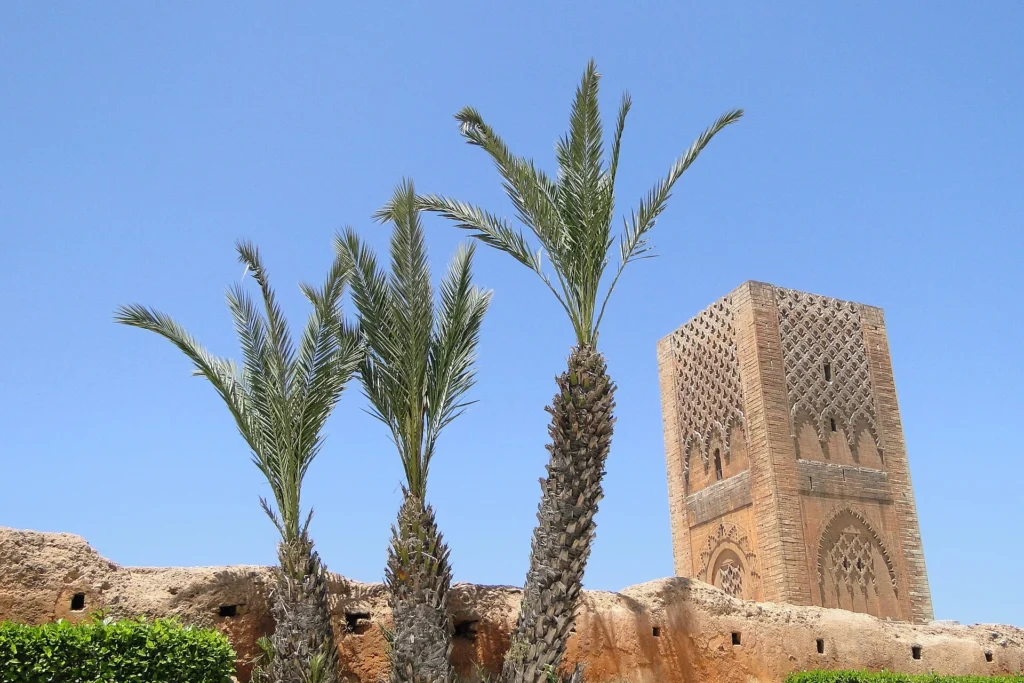
You visit the Hassan Tower, an unfinished minaret from the 12th century, and the surrounding gardens before continuing to Casablanca.
Day 9: Casablanca, the Hassan II Mosque and departure
Before your flight you visit the Hassan II Mosque, completed in 1993 and built partly over the ocean. Its minaret is 210 m tall, the second tallest in the world, and it is one of the few mosques open to non-Muslims.
Your driver then takes you to Mohammed V International Airport for your onward flight.
The honest numbers: distances and driving times
| Day | Route | Distance | Driving time | Overnight |
|---|---|---|---|---|
| 1 | Arrival in Marrakech | Airport transfer | Short | Marrakech riad |
| 2 | Marrakech to Dades Valley via Telouet and Ait Ben Haddou | ~330 km | 6 to 7 h with stops | Dades hotel |
| 3 | Dades Valley to Merzouga via Todra Gorge | ~270 km | 5 h plus camel trek | Private desert camp |
| 4 | Merzouga to Fes via the Ziz Valley and Ifrane | ~470 km | 7 to 8 h with stops | Fes |
| 5 | Guided tour of Fes | On foot | Full day | Fes |
| 6 | Fes to Chefchaouen via Volubilis and Meknes | ~260 km | 4.5 h with stops | Chefchaouen |
| 7 | Free day in Chefchaouen | On foot | Free | Chefchaouen |
| 8 | Chefchaouen to Casablanca via Rabat | ~340 km | About 5 h with stops | Casablanca |
| 9 | Casablanca and departure | Transfer | Short | Home |
Route map: 9 days from Marrakech to Casablanca
A night in the Sahara camp: what actually happens
Exact times shift with the season: sunset is around 6:00 PM in midwinter and after 8:00 PM in summer.
What is included and what is not
Included
- Private high-end 4x4 or minivan with powerful A/C, fuel, tolls and parking
- Professional English-speaking driver-guide
- Airport pick-up in Marrakech and drop-off in Casablanca
- 8 nights in selected riads and hotels, including a private tent at a private desert camp
- Daily breakfast, plus dinners in the Dades Valley and the Merzouga desert
- Camel trek in the Sahara at sunset and sunrise
- Official local guides in Fes and Marrakech
Not included
- Lunches and drinks
- Other dinners in the cities
- Tips for your driver-guide, guides and hotels
- Entrance fees to monuments
Where you will sleep
Marrakech (night 1) and the Dades Valley (night 2). A riad in the medina and a hotel or guesthouse among the rock formations.
Private desert camp in Merzouga (night 3). Your own private tent at a private camp in the Erg Chebbi, with a real bed and warm blankets.
Fes (nights 4 and 5), Chefchaouen (nights 6 and 7) and Casablanca (night 8). Traditional riads and hotels. The standard of each stay follows the accommodation category you choose.
Choose your accommodation category
Comfort (standard)
Clean, simple and great value. A good choice if you want the full experience on a sensible budget.
Mid-range
A step up in rooms, tents and dining for travelers who want extra comfort without the top price.
Luxury
Our most spacious tents and highest standard of hotel, ideal for a special occasion or a relaxed trip.
Not sure which to pick? Tell us your budget and preferences and we will recommend the right category for your group.
Price of the 9-day Marrakech to Casablanca tour
Prices depend on group size, season and the accommodation category you choose (comfort, mid-range or luxury), and fall per person as more travelers share the vehicle. Send us your dates and group size and we will reply within 24 hours with a clear, personal quote for the 9-day Marrakech to Casablanca tour.
Compare the options
| Option | Best for | Trade-off |
|---|---|---|
| 5 days to Fes | A relaxed one-way crossing with a full desert day | No time in Fes itself |
| 6 days to Fes | The same route plus a guided day in Fes | Ends in Fes, so plan your onward travel |
| 7 days to Fes | The slowest route, with Rissani and Midelt stops | Needs a full week |
| 8 days to Tangier | Desert, Fes and Chefchaouen, ending on the Mediterranean | A long trip that ends in Tangier |
| 9 days to Casablanca (this tour) | Arrival day in Marrakech, desert, imperial cities and the coast | Ends in Casablanca |
| 10 days to Casablanca | Adds a guided day in Marrakech to the 9-day route | The longest itinerary we run |
Best time to do this tour
| Months | Merzouga weather (approx.) | What to expect |
|---|---|---|
| December to February | Days 18 to 22 °C, nights near 0 to 5 °C | Clear skies and few crowds, but cold nights. Bring warm layers. |
| March to May | Days 25 to 35 °C, nights 10 to 18 °C | The most comfortable season for dunes and gorges. |
| June to August | Days 38 to 45 °C, nights 22 to 28 °C | Very hot. Dune walks only early morning and evening. |
| September to November | Days 25 to 35 °C, nights 8 to 18 °C | Excellent conditions, cooling steadily through autumn. |
What to pack for the desert night
- A small backpack for the camp (your main luggage stays in the vehicle)
- Light layers for the day and a warm jacket for the night
- Scarf or head wrap, sunglasses, hat and sun cream
- Closed, comfortable shoes for the gorges and kasbahs
- Reusable water bottle, power bank and a few small dirham notes
- Wet wipes and a torch or head lamp
Is this tour right for you?
A great fit if you
- Want to see the best of Morocco in nine days
- Are flying into Marrakech and out of Casablanca
- Like a mix of desert, cities and mountains
- Prefer a private guide and vehicle
Consider a different tour if you
- Only have a few days
- Want to return to Marrakech
- Prefer to finish in Tangier (see our 8 day tour)
- Dislike long driving days
Traveler reviews
We would rather point you to real feedback than print quotes on this page. Read what travelers say about Visit Maghreb on TripAdvisor or on our reviews page.
How booking works
Use the form or WhatsApp with your travel dates, group size and preferred accommodation category.
We reply within 24 hours with availability and a clear price for your group.
A deposit secures your dates. We then send pick-up details and a packing list.
Frequently asked questions
Do you pick me up at Marrakech airport?
Yes. Your driver meets you in the arrivals hall of Menara Airport (RAK) with a sign bearing your name and takes you to your riad.
Is Casablanca a good place to end the tour?
Yes. It has the main international airport, Mohammed V, and the Hassan II Mosque is a spectacular final visit before your flight.
How long are the driving days?
The longest are Day 4 (about 470 km, 7 to 8 hours), Day 2 (about 330 km, 6 to 7 hours) and Day 8 (about 340 km, 5 hours). Every long day is followed by a lighter one.
Can I visit the Hassan II Mosque?
Yes. It is one of the few mosques in Morocco open to non-Muslims, and guided visits run at set times. We plan your arrival so you can join one.
What is the difference between the 9 and 10 day tours?
The 10-day tour adds a full day with a guide in Marrakech and a hotel night near the dunes. The 9-day tour is a day shorter and goes straight into the High Atlas on Day 2.
Do I sleep in a private tent at the desert camp?
Yes. You sleep in your own private tent in a private desert camp, with real beds and warm blankets. Bathroom facilities depend on the accommodation category you choose (comfort, mid-range or luxury), so tell us your preference and we will confirm the details before you book.
How long is the camel ride, and can I skip it?
The trek into the dunes takes roughly 45 to 90 minutes depending on the camp. It is optional: you can reach the camp by 4x4 instead and still enjoy the sunset from the dunes.
When is the best time to do this tour?
March to June and September to November bring the most comfortable temperatures. Summer days in Merzouga often pass 40 degrees C, while winter nights can fall close to freezing, so pack accordingly. Tours run year round.
How do I book, and what is the cancellation policy?
Send us your dates and group size on WhatsApp or by email and we will confirm availability and the final price. A deposit secures your booking, and our cancellation terms are confirmed in writing before you pay.
Do I need a visa for Morocco?
Citizens of many countries, including the US, UK, EU states and Canada, can visit Morocco without a visa for up to 90 days, but rules differ by passport. Check the requirements for your nationality before you travel.
Photo credits
Photos are licensed under Creative Commons and were resized and converted to WebP for this page.
- Lone walker on the Erg Chebbi dunes at sunrise, Morocco: photo by Adrian Farwell (CC BY 3.0), via Wikimedia Commons.
- Jemaa el-Fnaa square in the heart of Marrakech, Morocco: photo by Angela Stefanoni (CC BY 3.0), via Wikimedia Commons.
- Tizi n Tichka mountain pass road crossing the High Atlas, Morocco: photo by Adrian Farwell (CC BY 3.0), via Wikimedia Commons.
- View of the earthen kasbah buildings of Ait Benhaddou near Ouarzazate: photo by C messier (CC BY-SA 4.0), via Wikimedia Commons.
- Limestone cliffs of the Todra Gorge in the High Atlas, Morocco: photo by Bjørn Christian Tørrissen (CC BY-SA 3.0), via Wikimedia Commons.
- Berber desert camp at Merzouga in the Sahara, Morocco: photo by gailhampshire from Cradley, Malvern, U.K (CC BY 2.0), via Wikimedia Commons.
- Sunrise over the Erg Chebbi sand dunes at Merzouga, Morocco: photo by Nomadz (CC BY-SA 3.0), via Wikimedia Commons.
- Rooftops of the Fes medina, Morocco: photo by Andrew Nash from Vienna, Austria (CC BY-SA 2.0), via Wikimedia Commons.
- Bab Boujloud, the blue gate of the Fes el Bali medina, Morocco: photo by Ideophagous (CC BY-SA 4.0), via Wikimedia Commons.
- Triumphal Arch of Caracalla at the Roman ruins of Volubilis, Morocco: photo by Dan Lundberg (CC BY-SA 2.0), via Wikimedia Commons.
- Blue-painted alley in the medina of Chefchaouen, Morocco: photo by Galanda23 (CC BY-SA 4.0), via Wikimedia Commons.
- Palm trees and the unfinished Hassan Tower in Rabat, Morocco: photo by Adam Jones, Ph.D. (CC BY-SA 3.0), via Wikimedia Commons.
- Hassan II Mosque on the Atlantic coast in Casablanca, Morocco: photo by OussamaHamama (CC BY-SA 4.0), via Wikimedia Commons.